Every year, the Chesapeake Bay Foundation releases their “State of the Bay” report, grading the health of the Bay based on pollution levels, habitat, and fisheries. The health levels are compared to the descriptions of Captain John Smith in the 1600’s, which theorizes that the Bay was 100% healthy during this time period. The verdict for 2018: D plus. Continue reading “The Chesapeake Bay’s Health: A Short Summary”→
This summer, I had the extraordinary experience of working as a wrangler in America’s first national park, Yellowstone. 2.2 million acres of undeveloped land, and the peaked mountains, rolling plains, and wildlife are something to behold. Everyday in the middle of work I would look out to Pleasant Valley and take in the beauty, realizing how lucky I was to have such a unique experience.
Working with animals, particularly horses, is work that is truly unlike any other. The routines of the horses had to be considered with each new day as we saddled, fed, and prepared them for the trail rides. While I have ridden horses my entire life, working alongside the horses for 12 hour days felt like I’d never actually seen a horse. But with each passing day the routine became ingrained in myself and my entire team, and to this day I still remember the routine that was my lifestyle for four months.
The Trump administration has proposed to eliminate $73 million in federal funding towards restoring the Bay. If this passes, does the Bay have any chance of becoming healthy?
Martin O’Malley sat in the office of his home in Towson, Maryland. The former Governor of Maryland, wearing a casual black shirt and jeans, which were a stark contrast to his usual suit and tie, was surrounded by awards he’d received during his eight years in office. The majority of those awards were for his environmental actions. A plaque with an oyster shell was awarded to him by Maryland’s Department of Natural Resources in 2011 for his work in restoring the oyster beds in the Chesapeake Bay. The University of Maryland Center awarded a map of Maryland and the Bay to him in 2014 for his “outstanding work in preserving our nation’s largest estuary”.
“Some of the happiest days of my life were spend on the Bay with my dad and mom,” O’Malley said. “They would often take us down to the Eastern Shore and we’d explore the black water wildlife refuge or just go mucking around on the riverbank.” Continue reading “The Chesapeake Bay: Hope for a Clear Future”→
Google+ was originally created with the intention of being the “new Facebook”, allowing the user to create a social media profile and platform to stay connected. However, Google+ never reached the popularity Facebook had, and today is one of the least used social media networks.
Google+ was first launched in 2011, and allowed users to create profiles to share updates from photos to relationship statuses. Instead of “friends”, contacts are put into “circles” and allow group messaging and upload photos only a certain circle can see. Google expected Google+ to rival the popularity of Facebook, and for its user count to skyrocket within the year. However, while the amount of users grew, the amount of time spent on the site was incremental compared to Facebook. By the end of the year Google+ had reached over 90 million users, but the amount of time spent on the site was just 3.3 minutes. In comparison, Facebook has 1.64 billion users, and the average time spent on Facebook is 7.5 hours.
When logging into Google+, it gives you access to all of your Google accounts such as Gmail and Google Drive. This explains why the user count bigger than the site’s success. However, a small amount of this demographic uses Google+ for the social platform it was designed to achieve.
There are varying opinions on why Google+ failed. One of the main reasons is the confidence of the Google team on its success. Because they saw user count continue to increase, they presented that as a display of success, despite the lack of time these users spent on the site. Google+ also didn’t provide the social media experience other sites such as Facebook provided. Google+ was less user friendly, and made users work harder to create their profiles (such as who to add to their circles) rather than having it be a simple five step process.
While Google+ succeeded in uniting all Google products and apps under one roof, it failed in the aspect of being a social media platform. Today, Google+ is constant at 100 million users, with the average time spent on the site still around 3 minutes. Google has shifted its focus away from the social media aspect and is focusing on creating a user friendly site that will easily connect all Google platforms both by mobile and by computer. While the dream of being the second Facebook is now a distant memory for Google+, its uses in connection can still prove to bring is popularity to the site.
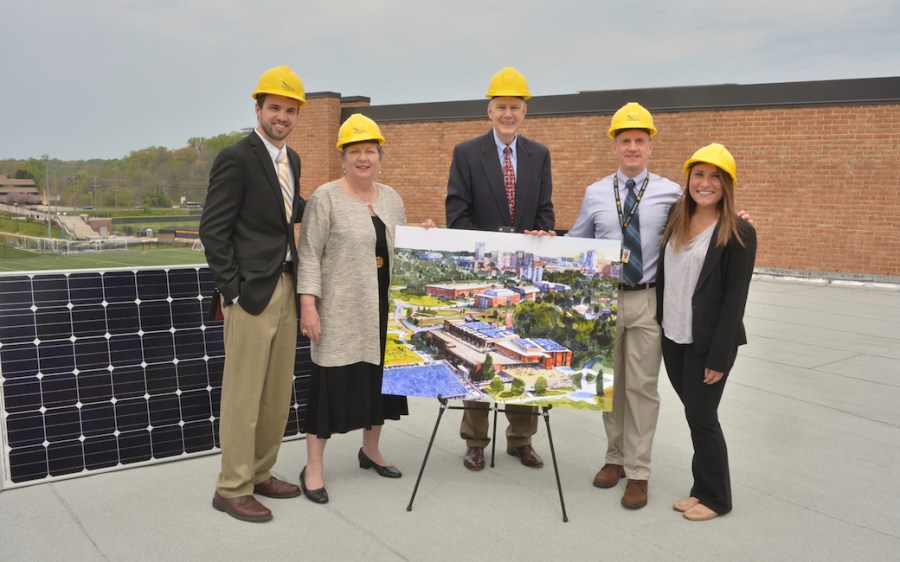
One of the main issues affecting college campuses nationwide is how they can become more sustainable. In the past ten years, Towson University has promoted sustainability on campus through five main initiatives implemented for the wellbeing of not only students but also the environment.
“With the cost of college and the demands on the students, we’re looking for ways to give them the experience that they need but also in a responsible way,” said Patricia Watson, campus planning and sustainability manager. “Because regardless of your major or whatever you’re doing, you have an opportunity to improve your environment.”
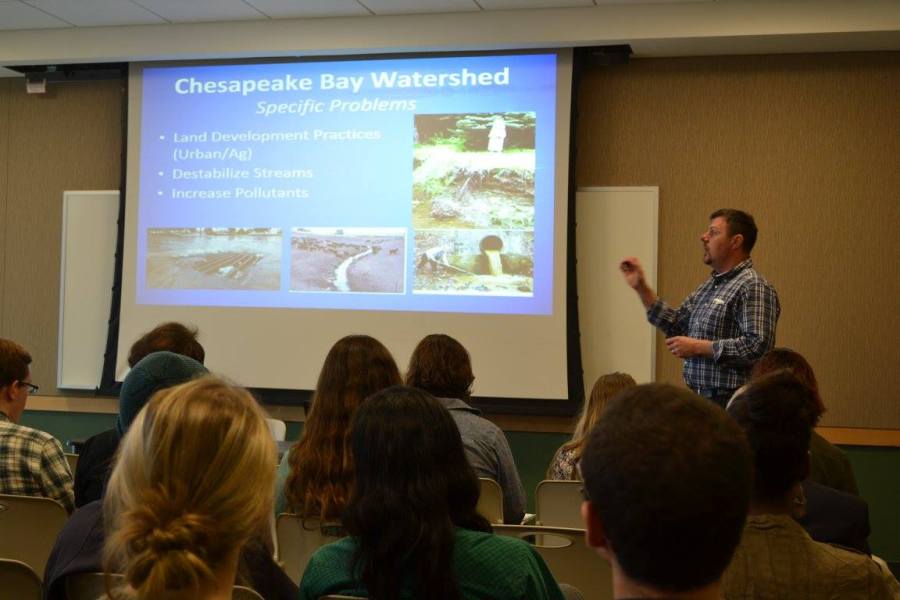
Students and faculty showcased environmental research and discussed local conservation efforts Friday, during Towson University’s 7th Annual Environmental Conference.
Hosted by the Office of Civic Engagement and Leadership and supported by the Office of Sustainability, the conference included multiple breakout sessions and a keynote address by Robert Summers, a senior research scientist at the University of Maryland Center for Environmental Sciences and former Maryland Secretary of the Environment.
“A huge part of working on this campus is who you know and who you can partner with to make it effective,” Office of Civic Engagement Coordinator Kevin Albano said. “Our office is all about making those connections and giving faculty, staff, and students the resources to get done what they want to get done and sustainability initiatives are a part of what we do.”
The discussion of sustainability on campuses revolved around structural changes campuses can make, such as solar panels, electric car charging stations, and LED lights. While all of these items are important, rarely do students closely work together or think about these sustainable measures. Across campuses nationwide, urban farms are encouraging students to not only know about sustainable food but to grow it themselves as well.
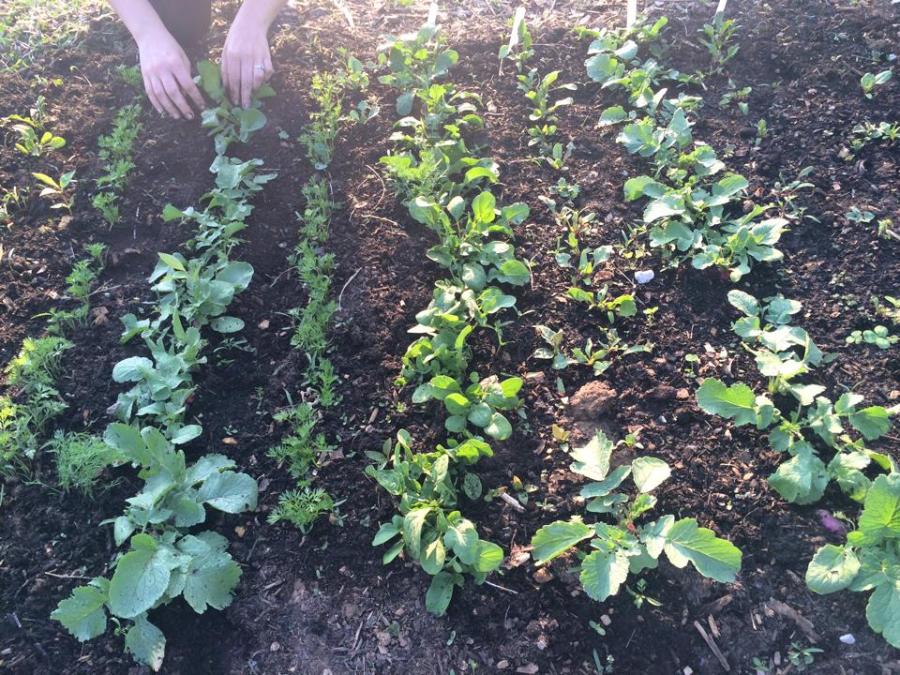
“It’s a garden that is run by students and for students,” said Benjamin Warner, the advisor for the Towson University Urban Farm. “Students can choose what they want to grow and tend to it themselves.”
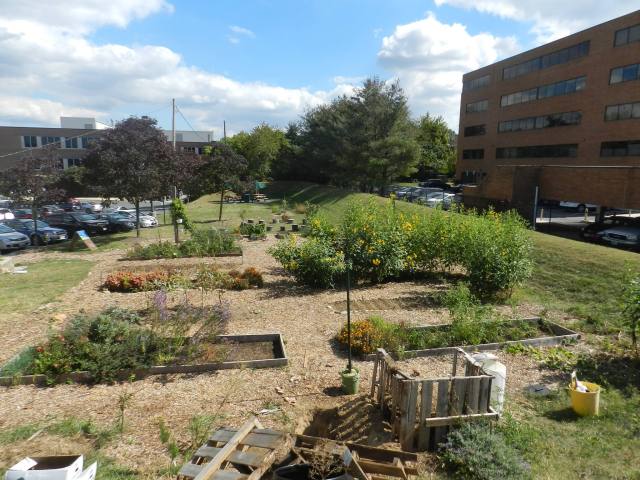
The urban farm is located behind the parking lot of the Administration building, where students can visit at any time. The farm is 100 square feet, but is expanding as the popularity of students growing their own food increases.
The urban farm teaches students about sustainability as well as where there food comes from, and the differences in organic farming compared to factory produce. The farm itself is also completely sustainable.
“We use compost from the university, we have no electricity or water source so we use hand tools and catch all of our water with rain barrels, and are completely organic,” Warner said. “We teach students about food systems, local food, and healthy eating. Students need to get in touch with what’s on their plate.”
Urban farms are not uncommon on college campuses. University of Maryland has a farm on campus that not only grows food but also contains animals such as cows and sheep to teach students about farm life they otherwise would not experience. Other schools such as Loyola and MICA also tend to their own urban gardens.
The Urban Farm group meets every Thursday and tends to the garden, growing whatever fruits or vegetables are in season. Students can then take the food they grow back to their dorms or apartments and prepare it themselves. The Real Food Challenge, a movement on campuses that push for sustainable eating, originated from the presence of urban farms and gardens on campus.
Urban farming continues to promote the conversation of sustainability, not in the structure of buildings but through the structure of food systems and students’ health.
“Solar panels, electric cars, recycled materials; though they’re all great, but they pale in comparison to the weight of what you eat everyday,” Warner said. “There’s no larger impact you can have in terms of sustainability than what you eat on a daily basis.”
At Towson University, a student-led organization called Eco-Reps are pushing to make campus more sustainable and students more eco-friendly. These students give speeches to student organizations, come up with ideas to make campus more sustainable, and plan campus-wide events to have students more involved.
“[One of our eco-reps] is working with art students to make sculptures out of recycled material,” said Marra Angelica, an Eco-Representative “right now I’m doing waste audits and doing compost data education outreach, which spans into the Office of Engagement and the Office of Sustainability.”
Eco-Reps have also teamed up with other organizations, such as the Real Food Challenge, to bring more sustainable food and food education to campus.
Eco-Reps organize events such as Recyclemania, Envirofest, and events on Earth Day.
While Eco-Reps is less known on campus then other organizations, as sustainability becomes a more popular topic, they hope to expand and connect with all students.
“I definitely believe that there is the potential to expand,” said Angelica. “the real issue is commitment and time and I think if they make it a paid position it definitely has room to expand.”
As the conversation about sustainability continues, the voice of students will play an important role in what universities construct or conserve on their campuses.
Photo credit: Towson University Sustainability site
Colleges and Universities across the country are increasing their standards for sustainability in construction. At Towson University, all new construction products since 2007 are considered environmentally stable according to the Towson University sustainability site.
This increase is due to the policies set forth by the United States Green Building Council, a non-profit organization that promotes sustainability in the construction and design of buildings. Through the USGBC, the Leadership in Energy and Environmental Design (LEED) rating system was created, which verifies is a building is environmentally sustainable.
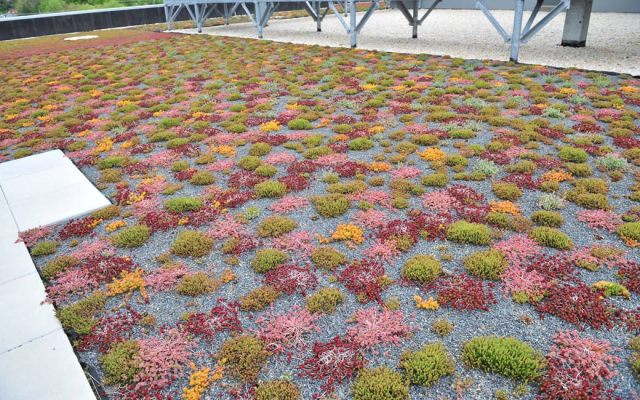
Towson University, aside from its new construction, has two LEED Gold certified buildings. These buildings, West Village Commons and the SECU arena, are the most sustainable among the university’s five other LEED Silver certified buildings. Each building contains water-efficient fixtures, recycling, environmental landscaping, and green roofs that reduce carbon dioxide emitted according to the site.
Towson University isn’t the only campus pushing for environmental sustainability. At MIT, their Sloan School of Management building has the highest energy performance possible according to the MIT energy initiative site.
Photo credit: MIT Energy Initiative site
“We tried hard, and I think succeeded, to get a building where the sustainability is baked in,” Walter Henry, director of the Systems Engineering Group in the Department of Facilities, told the site. “It isn’t the frosting but a fundamental part of how we designed the building.”
Cost is one of the biggest questions when colleges consider building green. But according to the MIT site, the design team found that constructing the Sloan building with energy-efficient features did not have any additional expense and instead saved MIT money.
Environmental construction has many benefits besides saving colleges money. Studies show that the presence of improved sustainable lighting have a 27% reduction of headaches on the people who occupy the building according to Wow.com. The decrease of headaches leads to a higher level of academic achievement according to the site.
Through sustainable construction, college campuses will have benefits that exceed simple monetary spending. As green building increases its presence, many hope that the push for green building will extend beyond the campus and to the community.
The Real Food Challenge chapter at Towson University hosted a dinner while discussing on campus food sustainability with students, last Wednesday. The dinner, which had been prepared for three days prior to the event, was 100 percent vegan and zero percent waste which embodies the goal of the Real Food Challenge.
Real Food Challenge is a national campaign with the goal of uniting students across campuses to rally for ethically sound and sustainable food. They hope to empower college students and universities to create healthy, sound and green food systems within their campuses. They hope to reallocate $1 billion of existing university food budgets from industrial farms towards local and community-based food sources by 2020.
“We have the power now to make a positive and active change,” Haley Molnar, a member of the Real Food Chapter at Towson University, said.
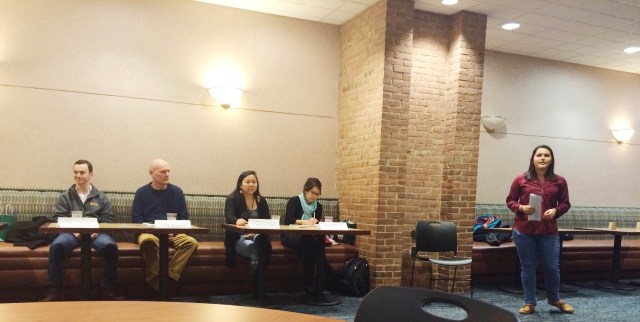
Before the dinner, a panel discussed food sustainability with students and debated several issues within university food sources. Their main focus was discussing how Towson University can become more sustainable.
“It’s all about the ways you individually reduce waste,” Evan Lutz, the CEO and co-founder of Hungry Harvest, said. The Hungry Harvest is a company that takes surplus produce and delivers it to customers to promote food security. “It takes a lot of collaboration with urban farming and farmer’s markets.”
Several on the panel agreed that farmer’s markets are an excellent way for students to buy locally, including Ned Atwater, the owner of the bakery Atwater’s that sells organic and local ingredients.
Unanimously, the panel agreed that awareness and empowerment are the two greatest sources in achieving food sustainability on campuses.
“The biggest problem on college campuses is that we’re not aware, and changing the viewpoint so people become knowledgeable is the main goal,” Clarissa Chen, a student at Johns Hopkins University and part of their Real Food Challenge team, said. “I think in terms of getting a college to change is a change in policy, and this change shows how much power universities have in the food market and system.”
After the panel discussion, students were served a vegan dinner with options that also included gluten-free meals. A ratatouille dish was served, as well as soup, salad, mango cake and bread provided by Atwater’s. The dinner served over 30 students, and produced zero percent waste including the silverware and dishes.
“We should all feel empowered to have a real say in the food system,” Allison Boyd said, the coordinator for the Farm Alliance in Baltimore City. The alliance increases urban farming and access to urban grown foods.
“Make shifts in supply through shifts in your demands by voting with your dollars,” Boyd said. “The more you know, the more you can change.”





 Theresa Schempp